







Nataraj vs Apsara: The Hidden Business Strategy That Built a ₹1000 Cr Empire
In every Indian classroom, there were always two types of students.
One group proudly carried Nataraj pencils — sharp, strong, and dependable. The other group loved the smooth and stylish Apsara pencils, which felt premium and looked “cool” in the pencil box.
And just like that, a silent rivalry existed in schools across India:
Nataraj vs Apsara: How Hindustan Pencils Built a Billion-Rupee Brand
But here’s the twist most people never knew.
This was never a real rivalry.
Because both Nataraj and Apsara belong to the same parent company — Hindustan Pencils Pvt. Ltd.. The company didn’t create two brands to compete with each other. It created them to dominate the entire stationery market — one for mass affordability and one for premium appeal.
And that is exactly why this story is more than childhood nostalgia. It is a perfect example of how smart branding and distribution can quietly build a business empire — the kind that can become a long-term wealth creator.
This narrative embodies the essence of the Hindustan Pencils Business Model, emphasizing how a strong market presence can lead to lasting success. It serves as a case study for understanding the dynamics of the stationery industry.
The Hindustan Pencils Business Model showcases strategic branding that caters to diverse consumer needs and reflects the innovative approach of Hindustan Pencils, aligning with market trends and consumer preferences.
The Beginning: A Small Pencil That Entered Every Home
Back in the old days, India’s stationery market was simple. Parents wanted pencils that were affordable, durable, and easily available. There was no concept of “premium stationery.”
That’s when two names started entering every school bag:
- Nataraj (mass-market pencils)
- Apsara (premium pencils)
Yes, most people don’t know this, but both Nataraj and Apsara are owned by the same parent company — Hindustan Pencils Pvt. Ltd.
They didn’t fight like enemies. They were actually two weapons from the same army.
Nataraj: The Mass Market Champion
Nataraj became famous because it was the “default pencil” for millions of Indian families. It was affordable, strong, and available in every small shop.
If a child lost their pencil in school, parents didn’t get angry because replacing a Nataraj pencil was easy and cheap.
It became the pencil of:
- middle-class homes
- government schools
- rural India
- tuition centers
- everyday classroom use
Nataraj didn’t try to be fancy. It focused on one thing: Maximum reach. Maximum trust.
Apsara: The Premium Feeling Pencil
Apsara, on the other hand, built its image differently.
Apsara pencils were smoother, sharper, and felt premium. Many students felt that writing with Apsara looked cleaner and better.
In many schools, Apsara became a status symbol. If you had an Apsara pencil, you felt like a topper already.
Apsara became popular among:
- urban students
- private schools
- students who loved neat handwriting
- parents who wanted “better quality”
So while Nataraj captured the mass market, Apsara captured the premium segment.
The Genius Strategy: Two Brands, One Company
This is where Hindustan Pencils played a masterstroke.
Instead of running one brand and fighting competition, they created two strong brands for two different audiences:
- Nataraj = volume game
- Apsara = premium trust game
This strategy gave Hindustan Pencils a massive advantage. No matter what type of customer walked into a shop, the shopkeeper had a Hindustan Pencil product to sell. That is how they captured the stationery market.
How They Won India: Distribution Was the Real Weapon
The real strength behind Nataraj and Apsara was not just quality.
It was distribution. Hindustan Pencils ensured that their pencils reached:
- big supermarkets
- small kirana shops
- village stores
- school canteens
- stationery wholesale markets
Even if a competitor offered a better pencil, the problem was simple: it wasn’t available everywhere. But Nataraj and Apsara were always available.
In India, availability itself becomes brand power.
The Problem Phase: Cheap Competition and Price Wars
The stationery market was never easy. Local pencil manufacturers started producing cheaper pencils, many copying designs and packaging. Competition increased, and pricing became tough.
Hindustan Pencils had to fight challenges like:
- cheap duplicates
- rising wood and graphite prices
- supply chain issues
- import competition
- shifting school demand
However, the company survived because it had something powerful: trust + brand recall + scale. When people trust a brand for decades, they don’t switch easily.
The Emotional Truth: Every Indian Has Used These Pencils
Almost every Indian has used one of these pencils at some point.
For many people:
- Nataraj was the first pencil used in childhood
- Apsara was the “special pencil” used during exams
- Both were part of school memories
This emotional connection is what makes consumer brands extremely powerful.
Why This Story Is a Big Investing Lesson
This pencil story is actually a perfect investing lesson.
In the stock market, the biggest wealth is created by companies that sell everyday products, repeatedly, to millions of people.
- Pencils are not luxury products.
- They are low-cost, high-volume products.
- But they have one huge advantage: Recurring demand.
Every year, new children enter schools. Every year, demand repeats. Every year, parents keep buying.
This creates stable business. And stable business creates long-term compounding.
The Hidden Power: Branding in Small Products Creates Big Wealth
People usually chase trending sectors like:
- AI
- EV
- Defence
- Solar
But many forget that India is a consumption-driven economy. The biggest businesses are often built in simple products like:
- pencils
- notebooks
- toothpaste
- biscuits
- soaps
Nataraj and Apsara prove one thing: even a ₹5 pencil can build a billion-rupee business if the brand is strong.
Nataraj vs Apsara: Not a Fight, a Perfect Business Model
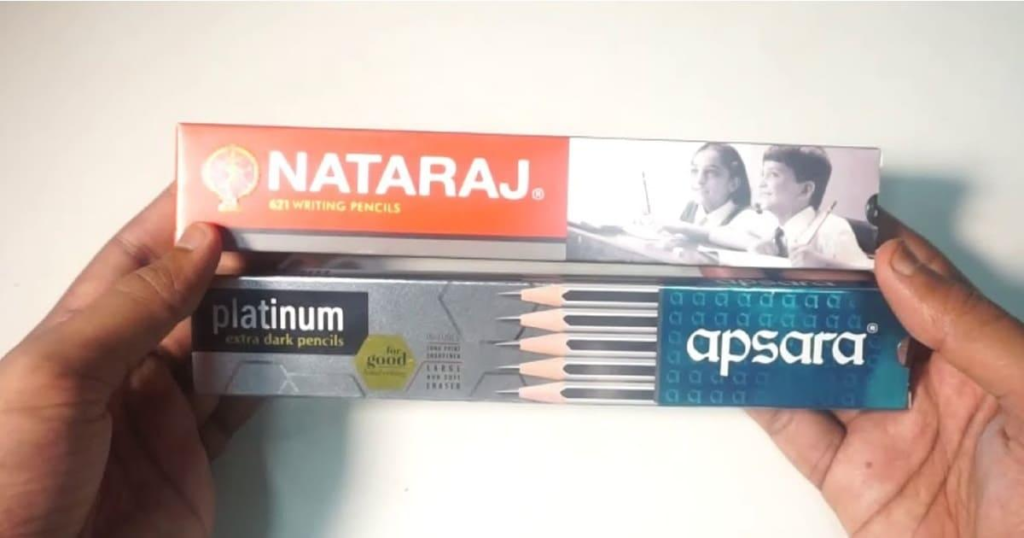
In schools, students think Nataraj and Apsara are competitors.
But in reality, Hindustan Pencils built a smart empire:
- Nataraj captured India’s mass market
- Apsara captured India’s premium market
- Both built trust together
- Both became unstoppable brands
This is how strong companies dominate markets.
Conclusion: The Next Multibagger Might Be a Simple Brand
The story of Nataraj and Apsara teaches a very important lesson for investors:
- You don’t need a complicated business to create massive success.
- Sometimes, the most powerful businesses are built quietly — inside classrooms, tuition centers, and school bags.
Brands like Nataraj and Apsara remind us that India’s real growth is in consumption, and the companies that control everyday demand become long-term kings.
So next time you see a pencil, don’t see it as a small product. See it as a reminder: small things, when repeated millions of times, create massive wealth.
Related Articles You’ll Love
If you enjoyed this story, you should also check out these related MoneyScope360 articles:
“Budget Fails the Middle Class” – Raghav Chadha in Rajya Sabha (2026)
Why the World Can’t Afford to Ignore India Anymore
What Indian Investors Can Learn from the US Stock Market
Ravi Invested Less. Earned More. Here’s Why
Rakesh Jhunjhunwala: From Short Seller to India’s Big Bull
FAQs
What is the main investing lesson from The Pencil Story?
The main investing lesson from The Pencil Story is that simple businesses like Hindustan Pencils can create long-term wealth through strong distribution, brand power, and consistent demand.
Why is Hindustan Pencils considered a strong business model?
Hindustan Pencils has a strong business model because of its nationwide distribution network, trusted brands like Nataraj, and scale advantage in a low-margin industry.
How can investors apply this lesson?
Investors can study companies like Hindustan Pencils to find businesses with durable moats, repeat demand, and long-term competitive advantage.
Written by Badri | MoneyScope360
360° of Money, Markets & Motivation



1 comment