







EMI Trap: Why Most Indians Stay Broke (And How to Break Free)
Introduction: The Illusion of Affordability
It starts with something simple.
Many people find themselves in the EMI trap without realizing it.
Many people find themselves in the EMI trap without realizing it. The constant cycle of EMI payments can lead to financial stress and instability.
A new phone.
A bike upgrade.
A sofa for your home.
Maybe even a dream car.
Every month, you pay your EMIs, thinking it’s manageable.
The price feels high at first. Then comes the magic word:
“Easy EMI”
Suddenly, ₹1,20,000 becomes just ₹3,499 per month.
Affordable. Manageable. Harmless.
And you think, “I can handle this.”
But what most people don’t realize is this:
Understanding the implications of EMI can help you avoid falling into a debt cycle.
EMI doesn’t reduce the cost.
It only hides the pain.
And slowly, without realizing it, you enter what I call the EMI trap.
What Is the EMI Trap?
When you think about your financial future, consider how EMI impacts your ability to save.
The EMI trap is a situation where a person keeps taking loans or buying on EMI, thinking it is manageable, but ends up with:
- Multiple monthly obligations
- Constant financial pressure
- No real savings
- No wealth creation
You are earning, but you are not moving forward.
From the outside, life looks comfortable.
Inside, it feels like survival.
Why EMI Feels So Easy
Let’s be honest. EMI is designed to feel easy.
Companies don’t sell products anymore.
They sell affordability.
Instead of showing the full price, they highlight:
- Low monthly payments
- Zero down payment
- No-cost EMI
It creates an illusion.
You don’t think, “Can I afford ₹1 lakh?”
You think, “Can I afford ₹3,000 per month?”
And that’s where the trap begins.
The Emotional Side No One Talks About
This is not just about money.
It’s about how EMI slowly affects your mindset.
But this constant cycle of EMIs can be harmful.
You start your month already committed.
Salary comes in, and before you even enjoy it:
- EMI for phone
- EMI for bike
- EMI for furniture
- Credit card bills
A large part of your income is already gone.
Many individuals find it challenging to break free from the habit of relying on EMI for purchasing.
You feel:
- Stressed
- Restricted
- Dependent on your next salary
You are not working for your dreams anymore.
You are working to pay your past decisions.
How EMI Keeps Most Indians Broke
1. It Kills Your Savings
When a fixed portion of your income goes into EMIs, saving becomes difficult.
You tell yourself, “I’ll save next month.”
But next month never comes.
2. It Delays Investing
Instead of investing early and building wealth, your money goes into liabilities.
While others are compounding their money, you are paying interest.
And time is something you never get back.
3. It Creates a Cycle
It can undermine your financial future if you rely too heavily on EMI.
One EMI leads to another.
You finish one loan, and instead of saving that amount, you take another EMI.
Phone → Bike → Car → Gadgets → Lifestyle
This cycle continues for years.
4. It Gives False Confidence
EMI makes you feel richer than you actually are.
You start living a lifestyle your income cannot truly support.
And when something unexpected happens, reality hits hard.
A Real-Life Situation Many Face
Let’s take a simple example.
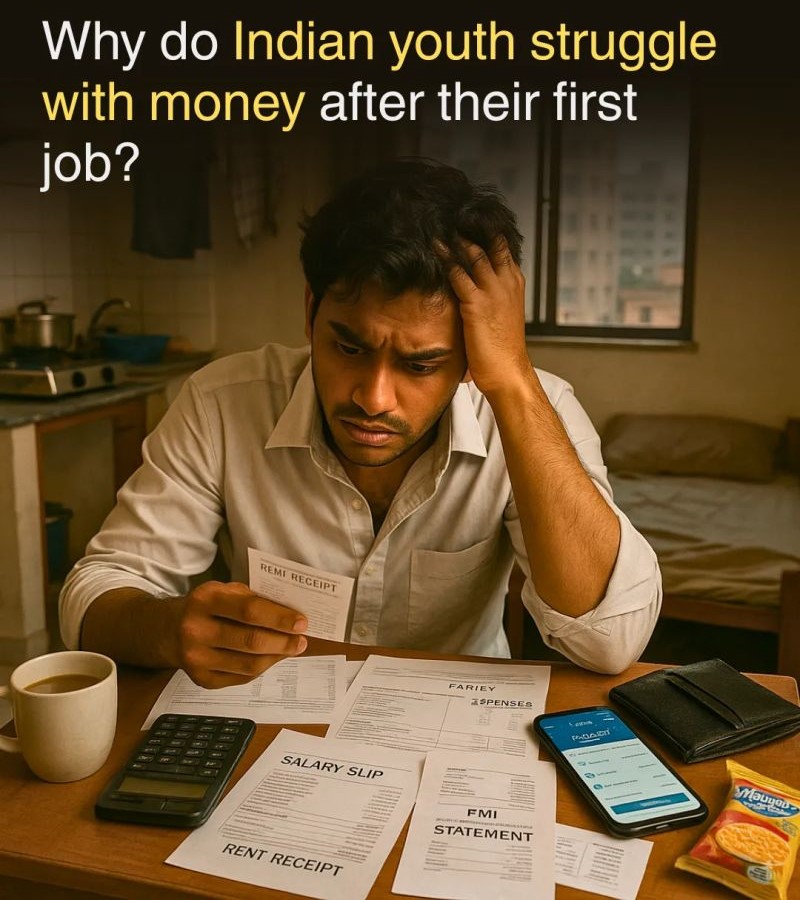
A person earning ₹40,000 per month:
- Phone EMI: ₹2,500
- Bike EMI: ₹3,000
- Personal loan EMI: ₹4,000
- Credit card dues: ₹3,500
Total: ₹13,000+
That is almost one-third of the salary gone.
Add rent, food, and expenses, and there is nothing left.
It’s important to understand how EMI impacts your wealth.
No savings. No investments. No freedom.
Just survival.
The Biggest Lie: “No Cost EMI”
There is always a cost.
Either:
- You lose discounts
- You pay hidden charges
- Or you get mentally locked into payments
Even if the interest is zero, the habit it creates is dangerous.
It trains your mind to depend on future income.
The Difference Between Rich and Broke Mindset
This is where things get interesting.
People who build wealth think differently.
They ask:
“Can I buy this without EMI?”
If the answer is no, they wait.
Because they understand one simple truth:
Assets create income.
EMIs create obligations.
When EMI Is Actually Okay
Let’s be practical. Not all EMIs are bad.
Some EMIs are necessary and even beneficial:
- Home loan (long-term asset)
- Education loan (career growth)
But lifestyle EMIs are the problem:
- Expensive phones
- Unnecessary upgrades
- Luxury items
You need to clearly differentiate between:
Need and Want
The Freedom You Are Missing
Imagine this.
No EMIs.
No monthly obligations.
No financial pressure.
Your salary is fully yours.
You can:
- Save more
- Invest more
- Take risks
- Explore opportunities
That is real freedom.
Not a phone bought on EMI.
How to Break the EMI Trap
Step 1: Accept the Reality
First, be honest with yourself.
List all your EMIs.
See how much of your income is going into them.
Awareness is the first step to change.
Step 2: Stop Adding New EMIs
This is very important.
No matter how attractive the offer is, pause.
Ask yourself:
“Do I really need this right now?”
Step 3: Clear High-Interest Debt First
Focus on:
- Credit cards
- Personal loans
These have the highest interest rates.
Clear them aggressively.
Step 4: Start Saving Before Spending
Even if it is a small amount, start saving first.
This builds discipline.
Gradually increase it.
Step 5: Build an Emergency Fund
This protects you from taking future loans.
Because most loans come from emergencies.
Step 6: Shift Your Mindset
Instead of asking:
“Can I afford the EMI?”
Start asking:
“Can I afford this without EMI?”
This single question can change your financial life.
The Emotional Shift You Need
This is not just a financial change.
It is a mindset change.
You move from:
- Instant gratification
to - Long-term satisfaction
You stop chasing things.
You start building stability.
You stop impressing others.
You start improving yourself.
You Don’t Have to Sacrifice Life
Let me be very clear.
This is not about living a boring life.
You should:
- Travel
- Enjoy
- Buy things you like
But do it with balance.
If you can save and then spend, the happiness is different.
It comes without stress.
Without guilt.
Without pressure.
A Simple Rule to Follow
Before buying anything, ask:
“Will this purchase give me stress or freedom?”
If it gives stress, rethink.
If it gives freedom or genuine value, go ahead.
Final Thoughts: Don’t Let EMI Control Your Life
Most people don’t realize they are stuck until it’s too late.
Years pass. Income increases.
But financial freedom never comes.
Because EMIs keep growing with income.
You don’t have to follow that path.
You can choose differently.
You can build a life where:
- You control your money
- Not the other way around
One Line to Remember
EMI makes things look affordable, but true wealth comes from owning your money, not owing it.
Ultimately, the goal should be to minimize reliance on EMI.
Real financial freedom comes when you are not dictated by EMI.
Remember, EMI may seem affordable, but it can lead to long-term financial strain.
Written by Badri | MoneyScope360
360° of Money, Markets & Motivation
Post Comment