






Common Money Mistakes Indians Make in Their 20s (And How to Avoid Them)
This Is Not Just an Article, It’s a Reminder
If you are in your 20s and reading this, you are already ahead of many people.
I still remember the feeling of getting the first salary. There is excitement, freedom, and a sense that life has finally started. You feel like you can do anything. Spend, travel, enjoy, upgrade your lifestyle.
And honestly, you should.
But somewhere between enjoying life and planning for the future, many of us lose balance.
We either spend too much and ignore the future, or we become too strict and forget to live in the present.
Understanding how to handle money can make a significant difference in your financial journey.
This article is not about restricting your life. It is about helping you find that balance so you can enjoy today without regretting tomorrow.
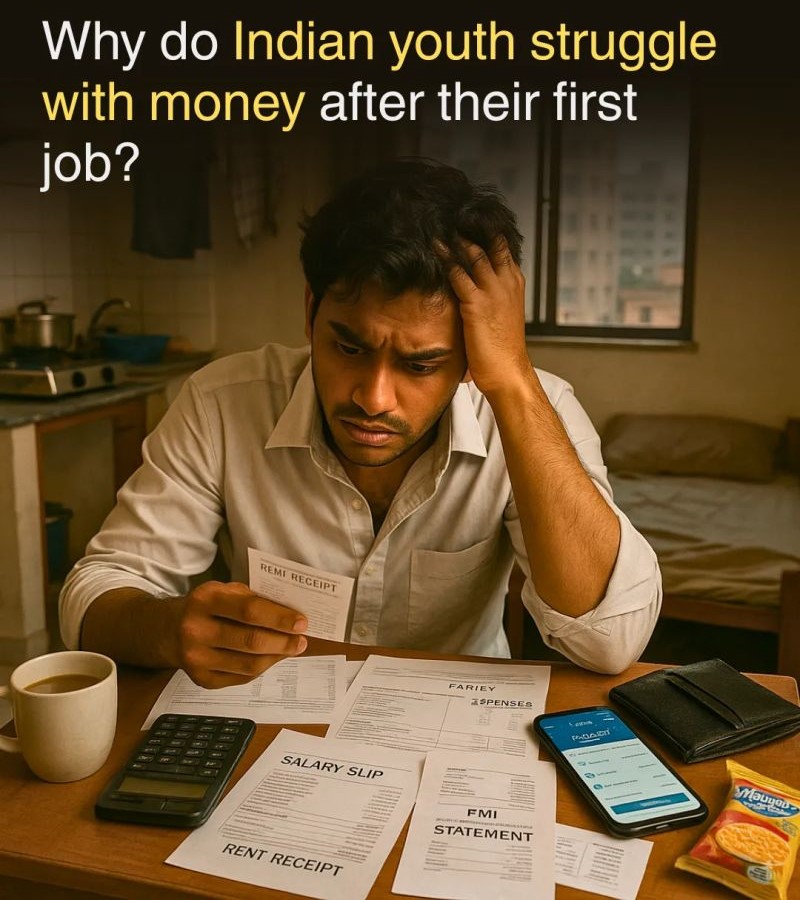
Living Without a Budget
In the beginning, most of us do not track money properly. Managing money is crucial for a secure future.
Salary comes in, expenses happen naturally, and at the end of the month we wonder where everything went.
Understanding how to manage your money is crucial for a secure future.
I have seen this personally and even experienced it in the early phase. Small expenses like food orders, subscriptions, and random shopping slowly eat up a big portion of income.
The problem is not earning less. The problem is not knowing where money is going.
When you start tracking your expenses, something changes. You become aware. You start making conscious decisions.
Budgeting is not about cutting your happiness. It is about giving direction to your money so that you can spend without guilt.
Not Building an Emergency Fund
This is something most people ignore because nothing bad has happened yet.
We assume life will go smoothly. But reality is different.
I have seen situations where people had to borrow money for medical emergencies or sudden expenses. Not because they were irresponsible, but because they were unprepared.
An emergency fund is not exciting. It does not give instant returns. But it gives something more important, peace of mind.
Even if you start small, building this habit early creates a strong safety net for your future.
An emergency fund is not exciting. It does not give instant returns. But it gives something more important, peace of mind. Even if you start small, building this habit early creates a strong safety net for your future. If you want a complete step-by-step guide, you can read our detailed post on how to build an emergency fund in India:
https://moneyscope360.com/emergency-fund-in-india-how-much-should-you-really-save-in-2025/
Delaying Investments
One of the biggest mistakes I notice is waiting for the “right time” to start investing.
People say they will begin after their salary increases or when they have more savings.
But the truth is, there is no perfect time.
What matters is starting early, even with a small amount.
The power of compounding works quietly in the background. The earlier you start, the less pressure you feel later in life.
If you delay, you are not just losing time. You are losing future opportunities.
Lifestyle Inflation
This is something almost everyone goes through.
As income increases, expenses increase automatically. Better phone, better lifestyle, more outings, more spending.
There is nothing wrong with upgrading your life. You worked hard for it.
But the problem starts when your expenses grow faster than your savings.
I have seen people earning good salaries but still feeling financially stuck. The reason is simple. Income increased, but so did unnecessary expenses.
The smarter approach is to upgrade your savings and investments along with your lifestyle.
Enjoy your growth, but do not let it control your future.
Depending on a Single Income
Relying only on a job feels safe, but it can be risky.
We do not think about it until something unexpected happens.
In today’s world, having multiple income sources is becoming more important than ever.
It could be something small. Freelancing, investing, or even building a blog like MoneyScope360.
The goal is not to overwork yourself. The goal is to create financial stability and freedom over time.
Misusing Credit Cards
Credit cards are easy to use and that is exactly why they can be dangerous.
Swiping feels simple, but repayment can become stressful if not managed properly.
I have seen people fall into debt traps just because they kept delaying full payments.
Using a credit card is not wrong. Using it without discipline is.
If you treat it like a tool and not extra money, it can actually help you. Otherwise, it can slowly damage your financial health.
Following Others Blindly
In today’s digital world, everyone has an opinion about money.
You see people talking about stocks, trading, crypto, and quick profits.
It is easy to get influenced.
But what works for someone else may not work for you.
I always believe this. If you do not understand where you are putting your money, you should not invest in it.
Take time to learn. Make your own decisions. That is how confidence is built.
Not Learning About Money
One thing I strongly feel is that we were never taught how to manage money.
We learned many subjects, but not how to handle our income.
Most mistakes happen because of lack of knowledge, not lack of ability.
When you start learning about saving, investing, and planning, your entire mindset changes.
You stop reacting and start planning.
Financial knowledge is one of the most valuable skills you can build in your 20s.
Ignoring Insurance
When we are young, we feel nothing will happen to us.
That is natural thinking.
But life is unpredictable.
I have seen how one unexpected medical situation can affect an entire family financially.
Insurance is not something we buy because we expect problems. We buy it so that problems do not destroy our savings.
It is a simple step that can protect years of hard work.
The Most Important Lesson: Balance
This is something I want to emphasize the most.
Life is not only about saving every rupee.
And it is also not about spending everything you earn.
Both extremes are dangerous.
You should travel. You should enjoy with friends. You should create memories. These moments will not come back.
At the same time, you should respect your future.
You should save. You should invest. You should plan.
The real success is not choosing one over the other.
It is learning how to balance both.
A Practical Way to Balance Life and Money
Think of your income in three parts.
One part is for your needs like rent, food, and essentials.
One part is for your future like savings and investments.
One part is for your present like travel, lifestyle, and enjoyment.
This approach helps you live without stress.
You do not feel guilty when you spend.
You do not feel insecure about your future.
That is the kind of balance everyone should aim for.
Final Thoughts: You Do Not Need to Be Perfect
Your 20s are not about getting everything right.
You will make mistakes. Everyone does.
What matters is learning early and improving.
Money should support your life, not control it.
Enjoy your present. Build your future.
If you can do both together, you are already on the right path.
One Line to Remember
Enjoy your life, but never forget the responsibility you have towards your future.
Written by Badri | MoneyScope360
360° of Money, Markets & Motivation

Post Comment