




“Budget Fails the Middle Class” – Raghav Chadha in Rajya Sabha (2026)
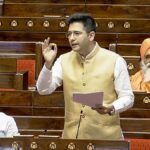
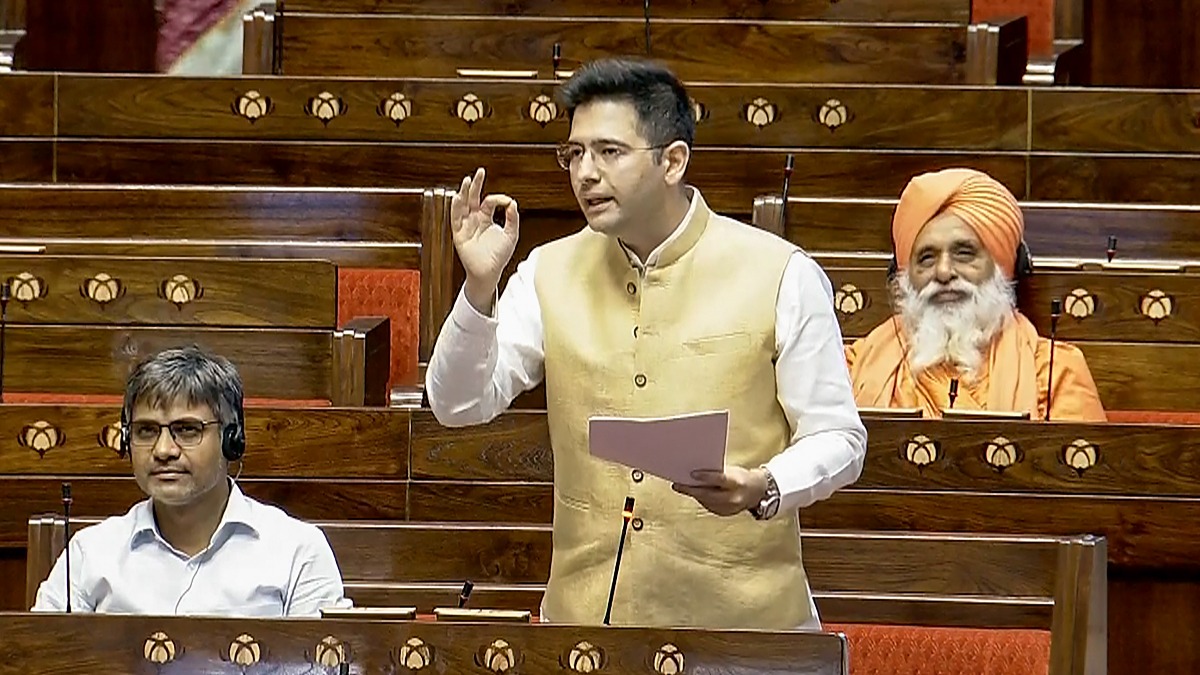
Raghav Chadha’s Budget Speech 2026 in the Rajya Sabha has sparked strong reactions across India. From income tax pressure and inflation concerns to STT and LTCG taxation on investors, here is a complete explanation of what he said and how it impacts the middle class and retail investors. The Raghav Chadha Budget Speech 2026 is pivotal for understanding these dynamics.
When the Union Budget is presented in Parliament, most speeches sound formal, technical, and filled with complicated numbers. But Raghav Chadha’s speech in the Rajya Sabha on the Budget stood out because it felt different—it felt real. He didn’t speak only for politicians or economists, he spoke for ordinary Indians, especially the middle class, who silently carry the nation’s financial burden every day.
Raghav Chadha Budget Speech 2026: A Voice for the Common Man
In this context, Raghav Chadha Budget Speech 2026 emphasizes the need for a more equitable approach to taxation that supports the financial stability of all citizens.
Instead of only discussing GDP growth and government targets, he spoke about issues that people actually feel every month—inflation, high income tax, rising GST burden, job insecurity, and the constant EMI pressure. The kind of pressure that makes a salaried person think twice before buying even small things, and makes families worry about savings even after working hard.
Most importantly, he highlighted the growing frustration among investors by pointing out how the government collects STT and then again charges LTCG tax, calling it an unfair double burden on middle-class investors. His words reflected what many small investors feel today—that even disciplined investing is slowly becoming more expensive.
At the same time, his speech was not only criticism. He also acknowledged some good points and positive initiatives in the budget, showing a balanced and mature political approach. And that is what made his speech feel meaningful—because it sounded like a voice of concern, not just a voice of opposition.
1. The Budget Looks Big, But Common People Still Feel Small
Raghav Chadha began by questioning the gap between budget promises and ground reality.
He suggested that while the budget looks impressive in speeches and newspaper headlines, common citizens are not experiencing the same improvement in their daily life. According to him, if the economy is really booming, then why do people still struggle with monthly expenses like:
- rent
- groceries
- school fees
- medical bills
- fuel costs
- household expenses
His message was simple: growth should not remain on paper—it must be felt in the pockets of people.
2. Middle Class: India’s Backbone, Yet the Most Ignored Class
One of the strongest highlights of Raghav Chadha’s budget speech was his focus on the middle class, calling them the most overburdened section of Indian society.
He explained that:
- Poor people get subsidies and schemes
- Rich people get business incentives and benefits
- But middle-class families get mainly taxes and responsibilities
He described the middle-class financial cycle in a way that instantly connected with working professionals:
Salary comes → income tax deducted → EMIs paid → bills cleared → savings disappear.
This is why his speech became relatable for salaried employees, private sector workers, and middle-income families.
3. Income Tax Shock: Salaried People Pay More, Gain Less
Raghav Chadha strongly criticized the high income tax burden on middle-class taxpayers.
He highlighted that salaried people are honest taxpayers, but they get limited benefits and very little relief. He questioned why income tax pressure remains high even when inflation and living costs are increasing every year.
He indirectly suggested that the budget should provide:
- better tax slabs
- higher exemption limits
- stronger deductions for salaried employees
- more relief for middle-income groups
His speech reflected the frustration of many people who feel they work hard, pay taxes regularly, and still struggle to build wealth.
4. Inflation: The Silent Killer of Savings and Salary Growth
Another major issue he raised was inflation.
He described inflation as a hidden enemy that slowly destroys the purchasing power of common people. He explained that inflation affects everything, including:
- vegetables
- groceries
- cooking oil
- milk
- medicines
- education fees
- transportation cost
- house rent
He made an important point: even if salaries increase slightly, inflation rises faster, making people feel financially exhausted.
According to him, no budget can be called “people-friendly” unless inflation is brought under strong control.
5. GST Burden: A Hidden Tax Trap for the Middle Class
Raghav Chadha also highlighted the burden of GST (Goods and Services Tax).
He suggested that GST has become a major pressure on middle-class families because it applies to almost every product and service. People pay GST on:
- clothes
- electronics
- home appliances
- restaurant bills
- insurance premiums
- construction materials
- daily lifestyle products
He indirectly warned that high indirect taxation reduces the purchasing power of the middle class, affecting India’s consumption-driven economy.
6. STSTT + LTCG Tax: Double Taxation That Hurts Long-Term Investors
One of the most impactful points in Raghav Chadha’s speech was about stock market taxation, especially the combination of STT and LTCG tax.
He explained that today, retail investors are facing a form of double taxation.
Step 1: STT (Securities Transaction Tax)
Whenever an investor buys or sells shares, mutual funds, or equity instruments, the government collects STT immediately.
This tax is charged regardless of profit or loss.
That means:
- STT is paid during purchase
- STT is paid during selling
- STT is paid even if the investor makes a loss
Step 2: LTCG (Long Term Capital Gains Tax)
After paying STT, if the investor holds shares long-term and earns profit, the government again charges LTCG tax.
So the investor pays:
STT first (transaction tax)
then LTCG later (profit tax)
Raghav Chadha’s Main Question
He questioned why a middle-class investor should pay STT and then again pay LTCG tax, calling it unfair and discouraging for long-term investors.
He explained that most investors are not ultra-rich traders. Many are common Indians investing for:
- retirement planning
- children’s education
- family security
- long-term wealth creation
- SIP and mutual fund growth
His argument was clear: if the government truly wants to promote financial literacy and stock market participation, then taxing investors twice through STT + LTCG makes investing less rewarding for the middle class.
7. The Rise of India’s EMI Economy: Living on Loans, Not Savings
Raghav Chadha also highlighted that India is slowly turning into an EMI-based economy.
He explained that people are buying everything through loans:
- home loans
- car loans
- personal loans
- credit card EMIs
- education loans
- consumer durable loans
This shows that the middle class is not living with savings—it is living with debt.
He indirectly warned that if this trend continues, the financial stability of Indian families will weaken, and long-term economic growth will suffer.
8. FII (Foreign Institutional Investors) and Market Confidence
Raghav Chadha also spoke about the role of FII (Foreign Institutional Investors) and their influence on India’s economy and stock market.
He explained that FIIs invest in India when they see:
- stable inflation
- strong rupee
- predictable government policies
- economic stability
- strong domestic demand
But FII money can exit quickly when conditions change. He indirectly warned that foreign money is not permanent and should not be treated as a guarantee of economic success.
His message was that India must strengthen domestic fundamentals rather than depending heavily on external capital inflows.
At the same time, global economic linkages matter. For example, understanding how strategic partnerships can expand India’s export market and increase investor confidence is key. In this context, insights on Why India’s Trade Deals Could Trigger the Next Growth Boom help explain how deeper trade agreements and open markets can attract long-term growth, strengthen domestic industries, and provide steady demand that benefits both investors and everyday citizens.
9 What Good Things in the Budget Did Raghav Chadha Appreciate?
Even though his speech highlighted major weaknesses, Raghav Chadha also appreciated some positive parts of the budget. This was an important sign of mature and responsible leadership.
1. Focus on Infrastructure Development
He acknowledged that the government’s push toward infrastructure—such as roads, highways, railways, logistics, and public development—can support India’s long-term growth.
Strong infrastructure improves:
- transport efficiency
- business productivity
- manufacturing supply chain
- job creation opportunities
2. Support for Capital Expenditure (Capex)
He appreciated the importance of capital expenditure spending because it helps build long-term assets for the country.
Capex is one of the strongest tools to create:
- construction jobs
- manufacturing demand
- long-term economic expansion
3. Boost for Manufacturing and “Make in India”
He recognized that India needs to become a manufacturing powerhouse and reduce dependency on imports. He supported the idea that the budget is trying to strengthen:
- domestic production
- industrial ecosystem
- exports and global competitiveness
This global competitiveness of India’s markets can help Indian investors understand broader growth opportunities — including what domestic markets can learn from mature markets abroad. For a deeper perspective on this, check What Indian Investors Can Learn from the US Stock Market — a helpful analysis for anyone seeking to build wealth by adopting global best practices in investment strategy and long-term wealth creation.
4. Digital Growth and Technology Focus
He also appreciated India’s progress in digital systems, fintech growth, and modernization.
Digital growth supports:
- transparency
- faster services
- better financial inclusion
- reduced corruption
5. Welfare Schemes for the Poor (But Not at the Cost of Middle Class)
He acknowledged that support for weaker sections is necessary. However, he argued that the middle class should not be ignored while implementing welfare schemes.
His message was clear:
support the poor, but don’t punish the taxpayers.
This balance was one of the most mature parts of his speech.
10. Healthcare Spending: India Spends Less Compared to Other Countries (Major Concern)
One of the most important points Raghav Chadha raised was about India’s healthcare budget allocation.
He stated that India is spending much less on health compared to many developed and even developing countries. He highlighted that while the government speaks about growth and global leadership, the actual spending on healthcare is still low.
According to him, many countries invest heavily in health because they understand one truth:
A healthy population is the foundation of a strong economy.
He compared India’s healthcare spending with other nations and implied that countries which spend more on healthcare enjoy:
- better public hospitals
- affordable treatment
- lower out-of-pocket expenses
- stronger medical infrastructure
- healthier workforce
He warned that in India, many families become financially weak because of sudden hospital bills, expensive medicines, and costly private treatment.
This is why he demanded stronger focus on:
- government hospitals
- medical facilities in rural areas
- affordable medicines
- better health insurance system
- increased public health spending
His message was clear: without improving healthcare investment, India’s development story remains incomplete.
Raghav Chadha strongly highlighted that healthcare expenses are rising fast, and common families are forced to spend from their own pocket. He warned that medical emergencies can destroy middle-class savings within weeks. That is why financial protection is becoming more important than ever. In this context, every family should understand Why Health Insurance Is a Lifesaver, Not Just a Policy, because rising hospital bills and increasing treatment costs are now one of the biggest threats to middle-class financial stability.
11. Youth Unemployment: Degrees Are Rising, Jobs Are Not
Unemployment was another major focus of his speech.
He pointed out that despite economic growth claims, many educated youth are struggling with:
- job insecurity
- low salary packages
- contract-based jobs
- lack of stable employment
He questioned how India can become a developed nation if its youth cannot find strong and stable career opportunities.
This point strongly connected with students, fresh graduates, and young professionals.
12. Education and Healthcare Becoming Too Expensive for Families
Raghav Chadha also raised concerns about the rising cost of:
- healthcare
- medicines
- private hospitals
- education fees
- insurance premiums
He suggested that development is not only about roads and infrastructure. Real development means affordable healthcare and quality education for all.
Because when healthcare and education become expensive, the middle class loses savings and gets trapped in long-term debt.
13. Rural India Matters: Growth Must Reach Villages Too
He also mentioned that India cannot grow only through metro cities and urban development.
India’s real strength lies in:
- farmers
- villages
- rural markets
- agriculture economy
- small businesses
If rural demand becomes weak, the entire economy slows down because consumption decreases.
14. Fiscal Deficit Warning: Growth Should Not Be Built Only on Borrowing
Raghav Chadha also hinted at concerns over fiscal deficit and heavy borrowing.
He warned that if government spending is heavily dependent on borrowing, future generations will face a bigger tax burden.
His message was that India’s growth should be strong, sustainable, and balanced—not loan-based.
15. Appreciating New-Generation Politics: A Fresh and Practical Style of Leadership
One of the most positive takeaways from Raghav Chadha’s speech is what it represents: new-generation politics in India.
This style of politics is:
- issue-focused
- data-driven
- practical
- policy-oriented
- connected to common people
Instead of only slogans and emotional speeches, he spoke about real topics like:
- inflation
- income tax burden
- STT and LTCG taxation
- unemployment
- EMI stress
- investment and economic stability
- healthcare spending comparison with other countries
This kind of leadership gives hope that Indian democracy is evolving into a more meaningful and solution-based system.
For many young Indians, such speeches feel modern, relatable, and refreshing.
15. Conclusion: Middle Class Is India’s Backbone, Not an ATM Machine
Raghav Chadha’s Rajya Sabha budget speech highlights one major truth:
India cannot become a superpower by overburdening the middle class.
A truly people-friendly budget should:
- reduce income tax pressure
- control inflation
- lower GST burden on essentials
- reconsider stock market taxation like STT + LTCG
- increase healthcare spending like other nations
- create stable jobs
- support long-term investors
- strengthen savings culture
At the same time, his balanced speech also recognized that investments in infrastructure, capex, and manufacturing can help India’s long-term growth.
His speech gave voice to the silent majority of India—the salaried class, honest taxpayers, and disciplined investors.
And most importantly, it showed that a new generation of leaders is rising in India—leaders who speak the language of economics, people’s problems, and real solutions.
Because when the middle class grows stronger, India grows stronger.
Frequently Asked Questions (FAQs)
1. What did Raghav Chadha say in the Budget Speech 2026 about income tax?
In his Budget Speech 2026 in the Rajya Sabha, Raghav Chadha criticized the high income tax burden on the Indian middle class and demanded better tax slabs, higher exemption limits, and more relief for salaried taxpayers.
2. Why did Raghav Chadha oppose STT and LTCG tax in Budget 2026?
Raghav Chadha questioned the double taxation on stock market investors through Securities Transaction Tax (STT) and Long-Term Capital Gains (LTCG) tax, arguing that it discourages long-term retail investment and wealth creation.
3. How does Budget 2026 impact middle-class investors in India?
According to Raghav Chadha’s Budget 2026 speech, rising inflation, high GST burden, income tax pressure, and stock market taxation reduce the savings capacity of middle-class families and retail investors.
4. What were Raghav Chadha’s views on inflation and GST in Budget 2026?
He stated that inflation and GST have increased financial pressure on common citizens, affecting purchasing power, consumption, and household savings.
5. Did Raghav Chadha support any positive initiatives in Budget 2026?
Yes, he appreciated infrastructure development, capital expenditure (Capex) growth, digital economy initiatives, and manufacturing expansion under Make in India.
Written by Badri | MoneyScope360
360° of Money, Markets & Motivation
2 comments