





Why Global Buyers Trust Gokaldas Exports Despite Trade Wars
If you closely track India’s export-focused textile and apparel space, Gokaldas Exports (GKEL) stands out for reasons far beyond scale or short-term numbers. In an industry where many players still compete primarily on price, Gokaldas has taken a more thoughtful and, in my view, more sustainable path. It is not trying to win by being “cheap”. It is trying to win by being reliable, scalable, compliant, and globally diversified, a positioning that has become even more relevant after the Atraco acquisition.
From observing global apparel supply chains, one thing becomes clear: price may get you the first order, but execution gets you repeat orders. Large international buyers operate on tight fashion calendars and seasonal demand cycles, where delays can be far more damaging than slightly higher costs. A missed shipment can mean lost shelf space, markdowns, and reputational damage for the buyer. This is why Gokaldas’ focus on on-time delivery, consistent quality, strong compliance systems, and multi-geography manufacturing carries real weight.
In this article, I take a deeper look at how Gokaldas Exports was built, who runs the company today, what exactly it manufactures, and where its real competitive edge comes from. Most importantly, I explore how the company is adapting in a changing global trade environment—especially at a time when the U.S., once its largest market, has become more challenging due to tariffs and shifting sourcing preferences.
Rather than viewing tariffs as a temporary setback, Gokaldas’ response offers a useful case study in how experienced export manufacturers think about long-term survival, buyer trust, and supply-chain flexibility. For anyone interested in India’s export story, this is not just a company overview—it is a lesson in how resilience is built in global manufacturing.
1) Origins: When and how Gokaldas started
Gokaldas’ roots are often linked to the Hinduja family’s garment business history, but Gokaldas Exports as the major successor entity is traced to 1979, when the business was split among three brothers and Jhamandas Hinduja led Gokaldas Exports.
Later, the company went public in 2005 and got listed on Indian stock exchanges—an important step because apparel manufacturing is working-capital intensive, and public markets help fund capacity expansion, process upgrades, technology adoption, and acquisitions.
Over time, Gokaldas transitioned from a traditional exporter into a process-driven, compliance-focused global supplier, which is critical for dealing with large international retailers.
2) What Gokaldas Exports actually does
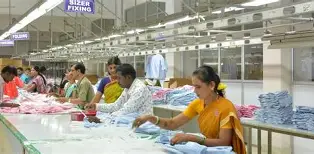
At its core, Gokaldas is an apparel manufacturer and exporter—meaning it does cut-make-trim (CMT) as well as full-package manufacturing for global brands and retailers.
Typical work included in their business model:
- Sourcing fabric & trims (depending on contract structure)
- Sampling and product development
- Bulk manufacturing at scale
- Quality checks, compliance audits
- Packaging, logistics, and shipment
Product categories (broad):
- Shirts, trousers, jackets
- Dresses, skirts, and casual wear
- Outerwear and seasonal fashion products
The company primarily follows a B2B export model and does not focus on building consumer brands. Instead, it acts as a long-term manufacturing partner to global apparel companies.
In recent years, Gokaldas has also expanded its footprint and customer base through capacity additions and acquisitions, most notably Atraco.
3) Management: Who’s running the show?
CEO / MD: Sivaramakrishnan (Siva) Ganapathi
Gokaldas Exports’ turnaround and strategic repositioning are closely linked to Sivaramakrishnan (Siva) Ganapathi, who joined the company as Managing Director & CEO in October 2017, at a time when the business was facing operational stress, margin pressure, and high dependence on the U.S. market.
Before joining Gokaldas, Siva Ganapathi had a long leadership career across large manufacturing and industrial organizations, giving him deep experience in operations, supply-chain management, cost control, and large-scale execution—all critical capabilities in the apparel export industry.
Under his leadership, Gokaldas has:
- Shifted focus from volume-led growth to profitable and sustainable growth
- Strengthened factory-level execution and operational discipline
- Improved return ratios and efficiency metrics
- Reduced customer and geographic concentration risk
- Pushed manufacturing and revenue diversification beyond the U.S.
- Executed strategic decisions such as the Atraco acquisition, aimed at long-term resilience rather than short-term gains
During the U.S. tariff disruption, Siva Ganapathi emerged as the key strategic voice of the company. Instead of reacting defensively, management adopted a balanced approach—absorbing short-term margin pressure to protect buyer relationships, while simultaneously redesigning the supply chain through geographic diversification and duty-friendly manufacturing locations.
This ability to combine short-term execution discipline with long-term strategic thinking has been critical in maintaining global buyer confidence during periods of trade uncertainty.
Chairman: Mathew Cyriac
Mathew Cyriac, Chairman and Non-Executive Director, brings strong capital allocation discipline, governance oversight, and strategic balance to the board.
His role is particularly important in an industry like apparel exports, where:
- Working capital requirements are high
- Margins fluctuate with demand cycles and raw material costs
- Expansion and acquisitions can strain balance sheets if poorly timed
Under the current board structure, strategic initiatives such as acquisitions, Africa expansion, and vertical integration efforts have been approached with measured risk assessment rather than aggressive leverage.
Why Management Matters in Apparel Exports
In the apparel export business, management quality itself becomes a competitive advantage. Global buyers do not only assess factories—they assess leadership reliability.
Buyers prefer suppliers whose management teams:
- Understand seasonal demand and fashion cycles
- Can respond quickly to disruptions (tariffs, logistics, labour issues)
- Communicate transparently during crises
- Deliver consistency across years, not just quarters
Gokaldas’ leadership has demonstrated this capability, which is why the company has been able to retain global buyers despite trade wars, tariff shocks, and supply-chain disruptions.
(For investors: in apparel exports, strong management often matters more than temporary cost advantages, because execution quality and buyer trust determine repeat orders and long-term contracts.)
4) The “edge” (moat): Why global buyers stick with Gokaldas
The apparel export business is brutally competitive. India competes with Bangladesh, Vietnam, Cambodia, and emerging African hubs. So what creates a durable edge?
A) Execution reliability (the silent moat)
Large retailers don’t just buy garments—they buy assured delivery, predictable quality, and seasonal accuracy. Missing a delivery window can mean empty shelves and lost sales.
Gokaldas has positioned itself as an execution-first supplier, a point repeatedly highlighted in investor communications and order book commentary.
B) Scale + multi-location manufacturing strategy
Depending on a single factory or geography is risky. Gokaldas operates across multiple units and regions, which:
- Reduces disruption risk (labour, power, logistics)
- Improves order scalability
- Allows better resource balancing during demand cycles
Scale also improves bargaining power with vendors and logistics partners.
C) Customer trust + compliance readiness
Global U.S. and EU buyers demand:
- Strict social and labour compliance
- ESG audits
- Quality certifications
- Traceability
Many mid-sized exporters fail here. Gokaldas’ compliance maturity makes it a “sticky” supplier, difficult to replace once onboarded.
D) The Atraco acquisition: diversification + “duty-friendly” capacity
A major strategic move was the acquisition of Atraco, valued at up to US$55 million.
Why it matters:
- Wider geographic manufacturing footprint
- Broader customer mix
- Exposure to duty-advantaged locations, especially Africa
- Reduced dependence on any single country or trade regime
Market commentary has noted that Atraco gives Gokaldas flexibility to shift production origin based on tariff structures, a crucial advantage in today’s trade environment.
5) Competitive landscape: Who are the “other players”?
In India, large apparel exporters include:
- Shahi Exports (private, very large scale)
- Other listed and unlisted apparel manufacturers
Private players often have larger capacity, but Gokaldas stands out among listed peers for:
- Governance transparency
- Global diversification strategy
- Institutional customer focus
Key takeaway:
Gokaldas competes less on price and more on global buyer readiness, execution reliability, and scalable delivery—the exact factors premium buyers care about.
6) The big question: If Trump tariffs hit India hard, how can Gokaldas survive?
This is the most important part of the story.
What happened (tariff shock context)
U.S. tariff increases created uncertainty for Indian garment exporters, making Indian products less competitive versus Vietnam and other trade-advantaged countries.
For Gokaldas specifically:
- The U.S. historically contributed a very large share of revenue
- Margins came under pressure
- The company temporarily absorbed part of the tariff impact to protect relationships
So how does Gokaldas survive?
Strategy 1: Shift revenue mix toward EU/UK
Gokaldas has stated its intent to increase shipments to Europe and the UK, aiming to meaningfully raise their revenue contribution.
Why this works:
- Reduces single-market risk
- Balances demand cycles
- Protects against sudden policy shocks
Strategy 2: Expand manufacturing in Africa (Kenya / Ethiopia)
The company is shifting part of manufacturing to African locations, where tariff structures can be more favourable for U.S. supply.
This allows Gokaldas to:
- Retain U.S. customers
- Change production origin instead of losing orders
- Stay price-competitive
Strategy 3: Preserve U.S. customer relationships (short-term pain)
By temporarily sharing tariff costs, Gokaldas chose relationship preservation over short-term margins.
This is common in apparel exports because:
- Losing a buyer can mean years of lost volumes
- Regaining trust is difficult once supply chains shift
Management has clearly indicated this is not a permanent solution, but a bridge strategy.
Strategy 4: Move up the value chain via integration
There have been public reports of vertical integration initiatives, including a proposed merger with BRFL Textiles (BTPL).
Benefits of integration:
- Better control over fabric supply
- Shorter lead times
- Improved margin stability
- Higher buyer stickiness
7) What investors should track from here (practical checklist)
For long-term investors, key monitoring points include:
- Geography mix: Is EU/UK share rising steadily?
- U.S. order stability: Are core customers retained?
- Africa execution: Ramp-up quality, labour stability, timelines
- Atraco integration: Synergies, customer cross-selling
- Margins: Recovery after tariff absorption phase
- Working capital discipline: Inventory and receivables control
Final takeaway
Gokaldas Exports is no longer just a U.S.-dependent apparel exporter.
Its survival strategy is clear:
- Diversify markets (EU/UK)
- Diversify manufacturing geography (Africa)
- Use acquisitions (Atraco) to expand capability
- Strengthen vertical integration to protect margins
Global retailers don’t stop buying clothes—they simply change where they source from. Gokaldas is positioning itself as the supplier that can say:
“We’ll manufacture from the location that keeps you competitive—without breaking delivery timelines.”
That flexibility, more than low cost, may define its long-term relevance in global apparel supply chains.
Written by Badri | MoneyScope360
360° of Money, Markets & Motivation



Post Comment